
How this Former Reddit Exec Wants to Bring Human Values Back to Modern Leadership
In this edition of 'From the Ground Up,' I talked to former Reddit exec and leadership consultant Will Cady, who says culture and values aren't soft skills. They're an operating system for the AI era.

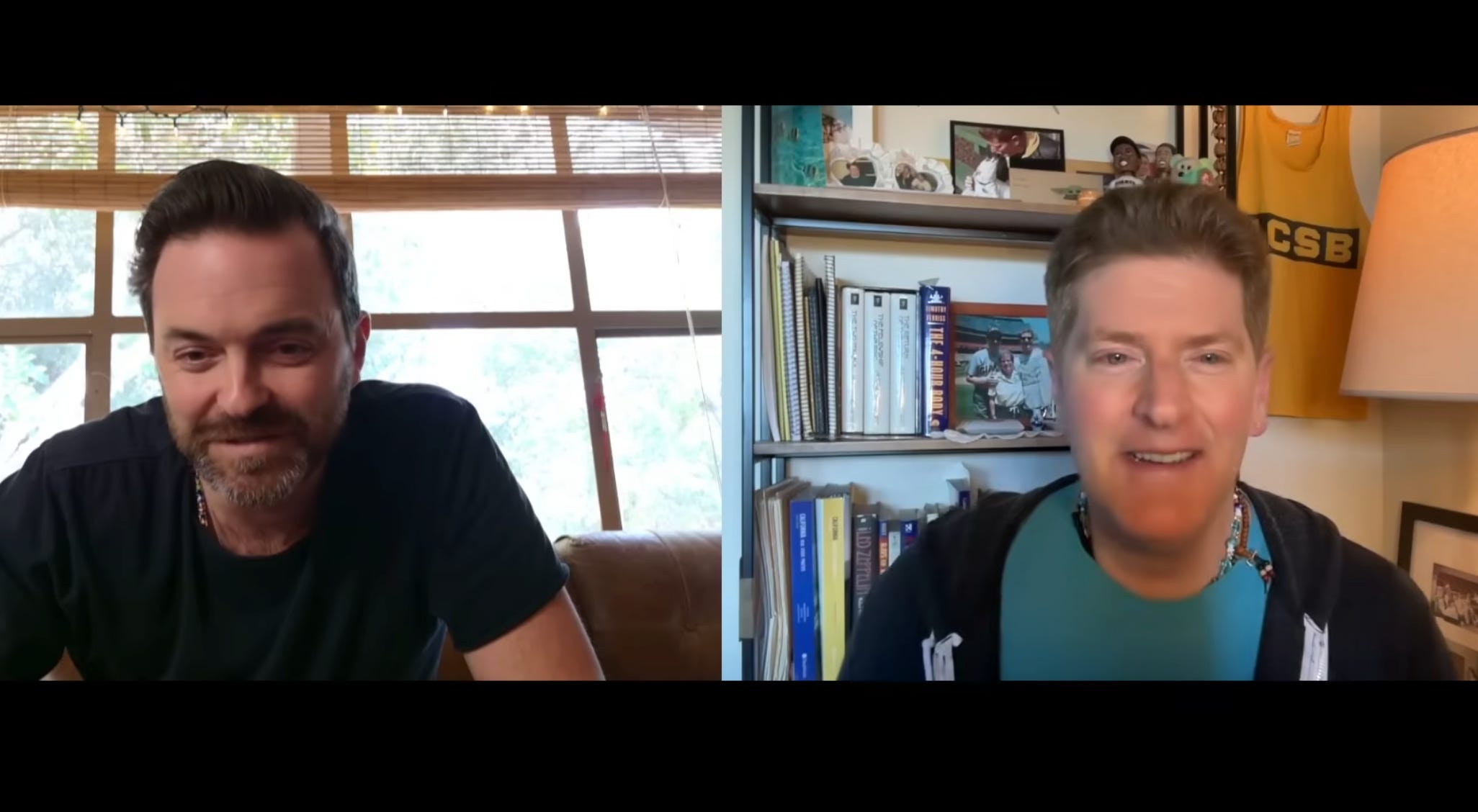
Will Cady does not talk about leadership like a typical growth consultant, and that is the point. As the founder of HEAL MVMNT and a former executive at Reddit, Cady operates at the intersection of culture, community, and decision-making, areas he argues have been treated as secondary to the hard metrics of modern business. In an era where AI systems increasingly shape supply chains, customer messaging, and the tempo of work itself, he believes the tools leaders need most are the ones many organizations have historically dismissed as soft.
HEAL MVMNT is his attempt to formalize those tools, not as inspiration, but as infrastructure. Cady describes HEAL as a partner to STEM, an acronym meant to sit alongside science, technology, engineering, and mathematics. Where STEM helps organizations measure, build, and optimize, HEAL is designed to help them decide why they are building in the first place, and how to stay coherent while doing it. The letters stand for Healing Environment, Art, and Language, a framework he uses to bring meaning, values, and story into the way leaders operate, from executive strategy down to the everyday choices made across an organization.
For more of my work, subscribe at 20% off below, and check out my Medium too.
Get 20% off forever
At its core, the work is about alignment. HEAL MVMNT helps leaders articulate values clearly enough that their organizations can make consistent decisions, even as systems become more automated and complex. Cady’s argument is that companies now risk becoming internally fragmented, not because they lack data, but because they have too much of it. With an overwhelming amount of information available, leadership shifts from extrapolating direction from scarce inputs to synthesizing signals and choosing a path. That choice, he says, cannot be made by spreadsheets alone. It is made through values, and values are rooted in human experience.
The Influence of Reddit
This view is shaped by Cady’s time at Reddit, where he helped build the platform’s presence and culture during a period when many industry observers still underestimated it. He frames that choice as a willingness to move early, to “zig” when others were “zagging.” What drew him in was not simply the business model, but Reddit’s character, its sense of humanity, and its ability to reveal what communities actually feel. He points to the platform’s long tradition of large-scale social experiments and its stated emphasis on remembering the human, an idea he says became directionally central to his own work.
Cady credits founder-led design philosophy as a major reason Reddit has remained durable while other platforms have struggled with identity. In his view, founders embed human touches that can’t be manufactured later, small signals that make a platform feel inhabited rather than purely engineered. That warmth becomes part of how users experience trust and belonging. Over time, he argues, the broader industry has bent toward what Reddit already was, rather than Reddit changing to match everyone else.
That sensibility also informs his take on emerging AI culture. When asked about a recent social experiment involving AI agents, he interprets the most sensational headlines as deliberate provocation, less evidence of autonomous rebellion and more a reflection of what people coded systems to perform. The deeper insight, as he frames it, is that many fears about AI are fears of human nature mirrored back at scale. AI itself is neutral, he suggests, but it will express whatever values it is aligned to, which makes the human job of setting direction even more urgent.
A World Filled with AI Influencers
The same logic applies to influence and marketing. Cady argues that AI influencers are not a distant future scenario so much as an extension of a present reality, where human creators already contort behavior to satisfy algorithmic reward systems. The difference, in his view, is that as synthetic influence becomes ubiquitous, human distinctiveness becomes the competitive edge. The more automated the ecosystem gets, the more valuable it is to stand for something that cannot be generated by optimization alone.
HEAL MVMNT’s advisory work grows out of that belief, but it is not limited to philosophical language. Cady positions the firm as a practical bridge between culture and business outcomes, helping leaders see blind spots they often do not realize they have. One of the most common entry points is when companies discover that online communities, particularly on Reddit, are criticizing them. Cady reframes that scenario as an asset rather than a threat. In his approach, public critique often signals passion and investment. The real issue is misalignment between the story a brand believes it is telling and the story people are actually hearing.
For companies trying to “activate” their community presence, his advice is direct: show up. Communities without guidance can become noisy, but a brand that participates with confidence can shape attention, structure conversation, and turn scattered energy into momentum. He frames this as a leadership function, the act of conducting an orchestra rather than letting the room fill with uncoordinated sound. Launches, major events, and cultural moments can become organizing anchors, giving people something shared to gather around.
That emphasis on internal coherence extends to how Cady thinks about building his own organization. HEAL MVMNT is navigating a transition from consultancy to operating company, with project-based teams and contractor “tiger teams” that assemble around client work. In that phase, culture is not an abstract manifesto. It becomes a test of whether work feels worthwhile. He measures it through lived experience, whether teams look forward to meetings, whether relationships form naturally, and whether the environment produces better work faster because it is grounded in respect and shared purpose.
Cady describes his client work across three broad categories. Some are consumer brands wrestling with experience and perception across multiple user types. Others live in the overlap between culture and commerce, where creativity, narrative, and participation are core to the business itself. A third category reaches deeper into what HEAL MVMNT views as cultural infrastructure, collaborations that connect modern leadership with long-standing models of community survival and shared meaning.
That last area is where his longer-term vision becomes clearest. Cady frames his career as proof that nontraditional disciplines can materially shape business performance. He points to the way music theory and artistic training informed his leadership approach, then argues there is an even deeper well of wisdom embedded in older cultural systems. In his view, many modern organizations have dismissed myth, ceremony, and symbolic tradition as ornamentation, when they can function as frameworks for coherence, gathering people, aligning them toward a vision, and sustaining communities across time.
Lead Through Seasons
For founders looking for a grounded starting point, Cady offers a deceptively simple practice: lead through seasons. Whether interpreted literally through natural cycles or more pragmatically through quarterly rhythms, he argues leaders should tell a story of what just happened and what comes next. That narrative work helps teams orient themselves, align effort, and move with less friction. It is not mysticism for its own sake, but a leadership tool that turns uncertainty into direction.
He distills the same principle into the title of his book and podcast, Which Way Is North, built around the idea that leaders must provide orientation, not just goals. When systems are complex and outcomes uncertain, people still ask where they are going. A leader’s job is to define a “north star,” a shared point of reference that turns possibility into choice. In Cady’s view, the most effective leadership tools are easy to use and difficult to master, simple enough to spread through an organization, deep enough to grow with you over time.
Taken together, Cady’s perspective lands as both a critique and a proposal. Business has become extraordinarily capable at building systems, but less fluent at building meaning. As AI expands what can be automated, the differentiator shifts toward what can be felt, believed, and coherently lived. HEAL MVMNT’s bet is that culture is no longer a side function of the brand team. It is the operating system that will determine how organizations navigate the next era of work.
Want more From the Ground Up? Check out more articles or head over to YouTube, Apple, or Spotify to watch the videos
John Boitnott is a journalist and digital consultant who has worked at media companies for 25 years and has advised startups since 2007. He writes about emerging companies, marketing and leadership at Entrepreneur, Jotform.com, Under30CEO, and his blog.